The BUS grant: what's actually involved
A plain-English walk-through of the Boiler Upgrade Scheme, covering the two grant rates, who qualifies, how the money flows, and what you actually have to do as the homeowner.
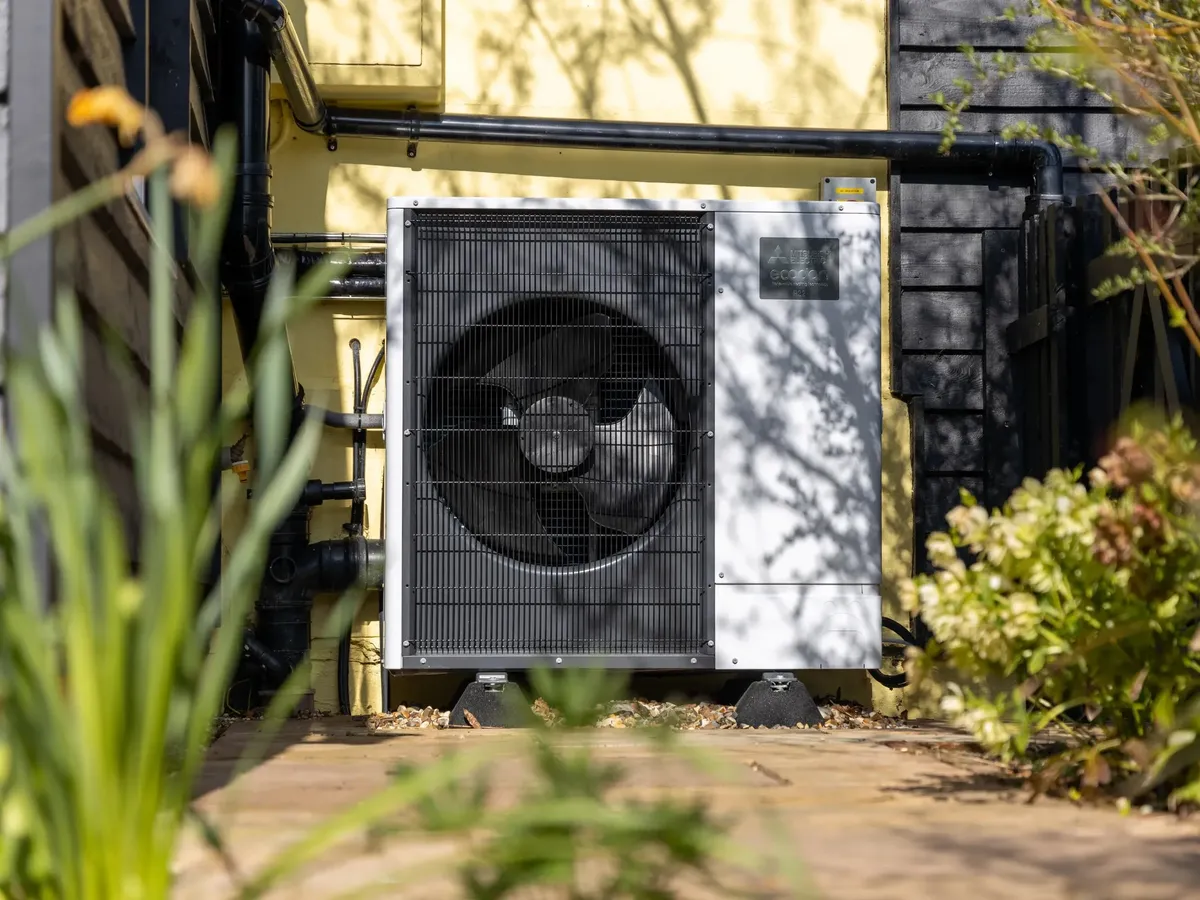
The Boiler Upgrade Scheme (usually called the BUS grant or just “the heat pump grant”) pays toward an air source heat pump install in England and Wales. It runs to at least 2028 with a £295m budget for the 2025–26 financial year. Most of what people read about it online is either marketing copy or two years out of date. Here’s the honest version.
How much you actually get
Since 21 July 2026 there have been two rates, and which one you get depends entirely on what heats your home today:
| What you heat with now | Grant | Notes |
|---|---|---|
| Oil or LPG | £9,000 | The off-gas-grid uplift. Available until 31 March 2027. |
| Mains gas | £7,500 | The standard rate, unchanged. |
The £9,000 rate applies to air-to-water and ground source heat pumps. It exists because the roughly 1.7 million oil and LPG households in England and Wales are mostly rural, mostly off the gas grid, and mostly paying more per unit of heat than anyone on mains gas — they’re the households where a heat pump makes the strongest financial case, and the ones where the upfront cost has been the biggest blocker.
If you’re on oil or LPG, note the date. 31 March 2027 is a hard end for the higher rate as it currently stands, and a heat pump install is a 6–10 week process from first call (see the timeline below). Leaving the survey until early 2027 is cutting it fine.
Who qualifies
The eligibility criteria are simpler than they look:
- You own the property (or have written permission from the landlord)
- The property has a valid EPC with no outstanding loft or cavity-wall insulation recommendations (or you’ll fix them as part of the install)
- You’re replacing a fossil-fuel system (gas, oil, LPG, electric)
- The install is by an MCS-certified installer using MCS-certified equipment
That’s it. There’s no income cap, no postcode restriction beyond England and Wales, and no requirement that the property be a primary residence. Holiday lets, second homes and small landlord portfolios all qualify.
What it doesn’t cover
The grant is for the heat pump only. It does not cover:
- New radiators (often needed for heat pump output)
- Underfloor heating retrofit
- A new hot-water cylinder (almost always needed)
- Insulation upgrades
- Smart controls beyond the basic thermostat
In practice, a typical 3-bed Cardiff retrofit costs £12,000–£16,000 before grant and £4,500–£8,500 after grant at the £7,500 rate — knock another £1,500 off both ends of that range if you’re on oil or LPG. The “headline” figure of “free heat pump” you sometimes see is misleading.
How the money actually flows
This is where most people get confused. As the homeowner, you never touch the grant money. Here’s the actual sequence:
- We do a free survey at your property to size the system, check eligibility, and confirm which rate you’re on.
- We give you a fixed quote, with the grant already deducted at the bottom.
- Before the install starts, the BUS voucher is applied for on your behalf. This takes 1–2 weeks.
- Once the voucher is issued, we book the install.
- The install is completed and commissioned.
- We submit the completion claim to Ofgem.
- Ofgem pays us the grant directly.
- You pay us the post-grant figure.
If for any reason the voucher isn’t approved, the install doesn’t go ahead, so you don’t pay the higher price. The risk sits with us as the installer, not you.
What MCS certification actually means
MCS is the standard required for any heat pump install to qualify for the grant. To be MCS-certified, the installer has to:
- Hold heat-pump-specific qualifications (e.g. BPEC, CIPHE)
- Pass annual installation audits
- Use MCS-approved heat pump models (Vaillant aroTHERM, Mitsubishi Ecodan, Daikin Altherma, etc.)
- Submit detailed sizing calculations (heat-loss surveys to BS EN 12831)
- Sit under RECC (Renewable Energy Consumer Code) for consumer protection
A regular Gas Safe engineer can’t apply for the grant on your behalf. The application has to go through the MCS route, which is why we sort the paperwork end-to-end rather than leaving it with you.
What the timeline actually looks like
For a typical Cardiff 3-bed semi:
- Free survey: 1–2 hours on site
- Quote turnaround: 3–5 working days
- BUS voucher application: 1–2 weeks
- Install booking: usually within 2–4 weeks of voucher approval
- Install itself: 2–3 working days
- Commissioning + handover: half a day
- Ofgem claim and payment: 4–6 weeks after completion
End-to-end: roughly 6–10 weeks from first contact to a fully-commissioned heat pump.
The honest catch
The grant is real and it’s a meaningful discount. But heat pumps are still typically more expensive than a gas boiler swap, even after it. The argument for switching is the 20-year running cost, not the upfront price. We won’t recommend a heat pump unless your house genuinely suits one. Older solid-wall properties with poor insulation are usually better off with a high-efficiency gas combi until the insulation is sorted.
The one place the sums have genuinely shifted is oil and LPG. £9,000 off, against a fuel that’s more expensive per unit than mains gas to begin with, is a materially different proposition to the one those households were looking at a year ago.
If you want the short version: yes, the grant is real, no, it isn’t free, and the next step is a free survey to see if your specific house qualifies. We do those across Cardiff and South Wales, with no obligation.