Qualified contractors Certified electricians where required
Electrical
Generator installation
Standby and portable generator installation for homes and small businesses; automatic transfer switching, properly grounded, fully Part-P notified.
Pricing Quoted
Clear quote · Gas Safe registered · Checkatrade approved
- 1Send the detailsPhotos, postcode, what's happening: phone, WhatsApp or form.
- 2Same-day replyNigel confirms price, visit time or survey slot.
- 3Fixed quoteWritten down before any work starts. No surprises.
Vetted, certified, accountable.
Part P Notifiable work registered with local authority
Alarms Smoke and CO alarm installs

Checkatrade Approved and reviewed
Indicative scope
Exact pricing is confirmed before work starts and depends on the property, access, parts and fault diagnosis.
Portable + inlet
Quoted
Manual-start portable + wall-mounted inlet panel
- Wall-mounted inlet socket (32A or 16A)
- Manual transfer panel (4–6 critical circuits)
- DNO notification (where required)
- Full earth-fault protection
- Test + commission
Standby (LPG)
Quoted
Auto-start LPG generator with auto transfer switch
- Honda EU22i / Briggs / Generac standby unit
- Auto-transfer switch (ATS)
- LPG tank install or refill connection
- Permanent slab + sound dampening
- Quarterly test cycle programmed
Whole-house standby
Quoted
8–11kW LPG / diesel for whole-property continuity
- 8–11kW unit (Generac, Kohler)
- Auto-transfer switch
- Underground LPG / external diesel tank
- Acoustic enclosure to neighbour-friendly dB
- Annual service contract
Generators
Power-cut resilience for home or small business?
Standby and portable generator installation for homes and small businesses; automatic transfer switching, properly grounded, fully Part-P notified.
At a glance
Quick facts before you read on.
What's included
5 things, no extras on the day- Wall-mounted inlet socket (32A or 16A)
- Manual transfer panel (4–6 critical circuits)
- DNO notification (where required)
- Full earth-fault protection
How we quote
Confirmed before work startsManual portable generator + inlet panel.
Certification
NICEIC Part PJob done to standards. Paperwork on the day.
Service area
Cardiff, Penarth, Barry, CaerphillyPower cuts in South Wales are rare but increasingly disruptive, particularly for home-office workers, small businesses, medical practices and anyone running freezers or critical equipment. A properly installed standby generator picks up the load within seconds and runs for as long as there’s fuel.
Standby generators
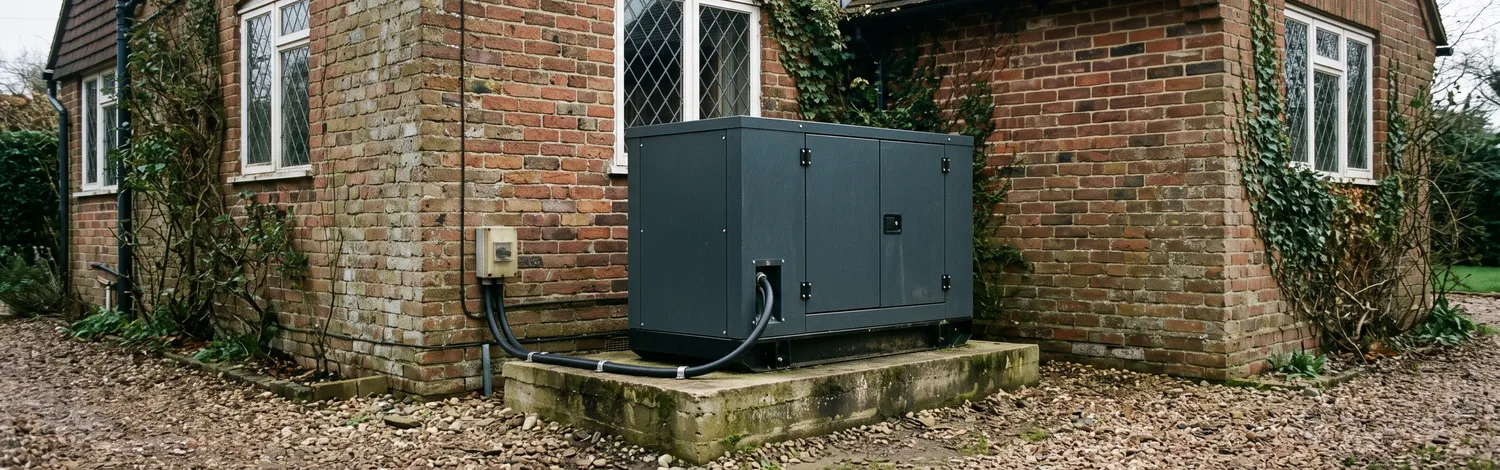
Permanently mounted, fuel-fed (LPG or diesel), with an automatic transfer switch (ATS) that detects a grid outage and starts the generator without intervention. The generator typically takes 8–12 seconds to come online; the ATS swaps the property load over once the generator is at full speed.
Typical 8 kW domestic install: £4,500–£6,500 fitted and certified, depending on cabinet, fuel storage, and whether new earthing is needed.
What’s involved:
- Concrete slab + acoustic cabinet: the generator sits outside in a sound-insulated cabinet (typical noise rating 60–70 dB at 1m, dropping fast with distance).
- Fuel storage: either an underground LPG tank (typically 1,200–4,000L for residential) or a daily-service diesel tank (200–500L).
- Auto-transfer switch: wired between your main service and your consumer unit. Detects grid loss, signals generator to start, swaps load.
- Generator: Honda, Briggs & Stratton, Generac, or Kohler depending on output. We’re trained on all four.
- Annual service contract: every standby unit needs annual testing and oil changes. We book the schedule with you.
Portable / inlet generators
A simpler option: a manually started portable generator plugged into a wall-mounted inlet socket that powers selected critical circuits via a transfer panel. From £1,200 for the inlet and panel, plus your choice of generator (typically £600–£1,500 for a quiet 3–6 kW unit).
When the power goes out, you wheel the generator outside, fire it up, plug it into the inlet, and flip the switches on the transfer panel for the circuits you want powered (typically: fridge, freezer, broadband router, a couple of lights, kitchen ring main, central heating control). Comes back on in 5 minutes and runs for as long as you’ve got petrol.
This is the right choice for most domestic users who want resilience for a £30/year of standby electricity bill. The portable can also be borrowed for camping, weddings, garden parties, unlike a standby that’s permanently mounted and dedicated to grid-failover.
Critical-circuits panel
For both standby and portable installs, the critical-circuits panel decides what gets powered when the generator runs. Typical choices:
- Always on: boiler, fridge/freezer, broadband, security alarm, key lighting circuits.
- Sometimes on: kitchen ring (cooking + dishwasher), washing machine, immersion heater.
- Off during outage: electric shower (high load), tumble dryer (high load), EV charger (very high load), pool/hot-tub.
We program the panel based on your generator size and your priorities at survey.
DNO notification
Generators that export back to the grid (parallel-running) need DNO notification and approval. The vast majority of domestic and small-commercial generators are island-mode: they run on their own when grid fails and disconnect when grid returns. These don’t need DNO notification.
We’ll confirm at survey which category your install falls into.
Earthing: the bit most installers miss
Generator earthing is more nuanced than grid-supply earthing. Depending on your supply type (TN-S, TN-C-S, or TT) the generator may need a separate earth rod and an O-PEN device, or may bond into the existing earth, or may need a switched earth via the ATS.
Getting this wrong is dangerous and is the most common reason a generator install fails an EICR or insurance check. We design the earthing per BS 7671 from day one.
Common mistakes other firms make
- Skipping the auto-transfer switch. Without an ATS, the generator can backfeed into the grid, which is illegal and dangerous. We never install a standby unit without an ATS.
- Wrong-sized fuel tank. A 200L tank lasts 8–12 hours on an 8 kW generator. For multi-day grid failures, you want 600L+ or refill arrangements pre-booked.
- No acoustic enclosure on residential standby. Neighbour relations matter. We always specify cabinets that hit residential noise targets.
Pricing
- Manual-start portable + 4-circuit inlet panel: £1,200–£1,800 + your portable generator.
- 8 kW LPG standby + ATS + slab + acoustic cabinet: £4,500–£6,500 + LPG tank install (typically £1,200–£2,800 separately).
- 11 kW LPG/diesel standby (whole-house): £6,500–£9,500 + tank.
Workmanship and warranty
12-month workmanship warranty on every install. Manufacturer warranties: Honda 3 years, Briggs & Stratton 2 years, Generac 5 years, Kohler 5 years (extendable to 7 with annual service). Annual service contracts available: typically £180/year covering oil change, filter change, full test cycle.
We run a small clinic, where power cuts cost us £1,200 a day in cancelled appointments. PHBLUE installed an 8kW Generac standby with auto-transfer. Two grid failures in 18 months, both seamless. Patients in the chair didn't notice. Worth every penny.
Recent jobs near you
A few of the jobs we have finished lately, with the postcode and what was involved.
- CF64 April
Penarth dental clinic. 8kW Generac standby + auto-transfer switch.
- CF14 March
Whitchurch home office. Manual-start portable + 4-circuit inlet panel.
- CF11 March
Pontcanna detached. 11kW whole-house Kohler standby with underground LPG.
- CF24 February
Cardiff Bay co-working space. 6kW LPG standby with ATS.
How the job runs
- 01

Free survey
1 hourWe measure existing supply, identify critical circuits, confirm fuel access (LPG or diesel) and slab/cabinet location. Fixed-price quote within 5 days.
- 02
DNO notification
1–3 weeksWhere the supply needs uprating, we file the DNO notification. For most domestic standby installs, no DNO change required, just the unit and ATS.
- 03
Civil works
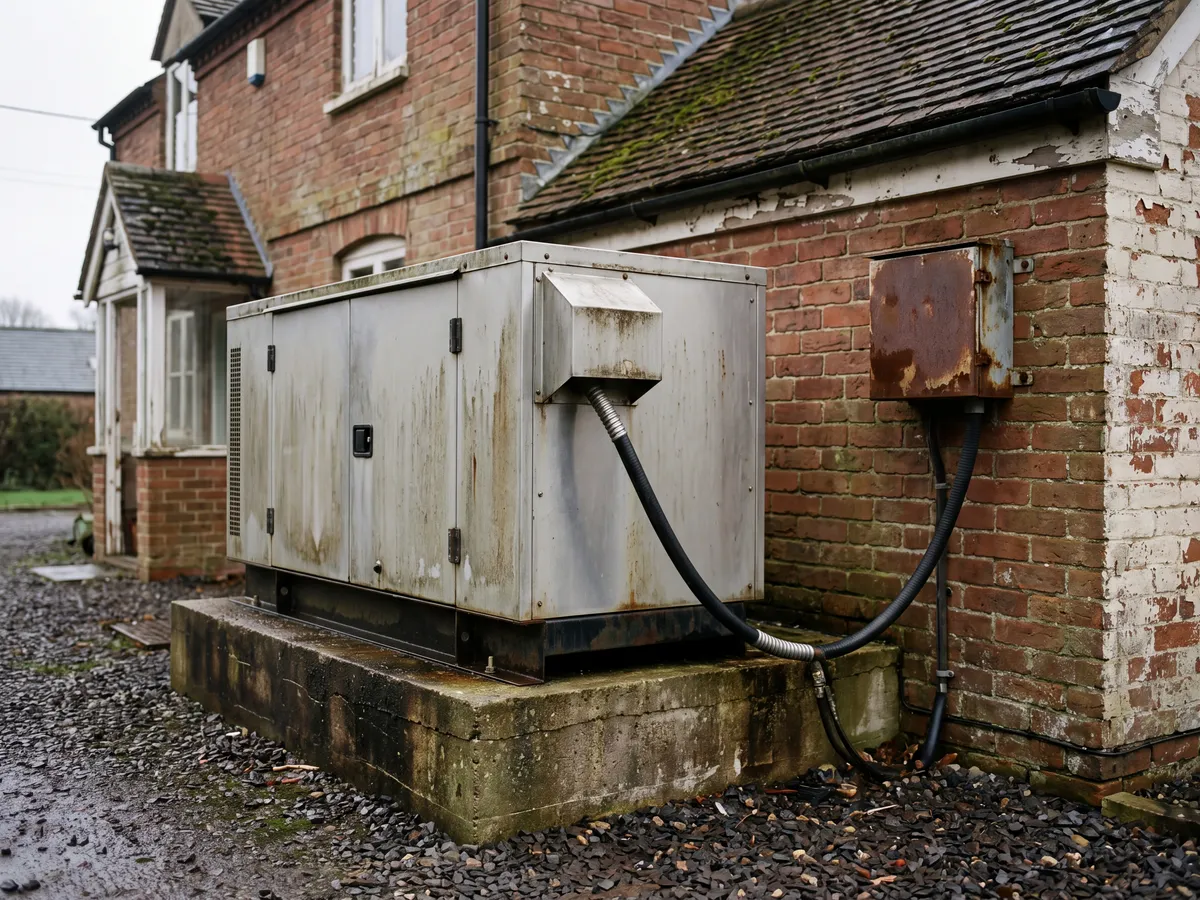
1–2 daysConcrete slab poured for the unit, cable trench dug, LPG tank installed (where required), acoustic enclosure positioned.
- 04
Electrical install
1–2 daysAuto-transfer switch wired, generator commissioned, full earth-fault protection installed (TT or TN-C-S compliant). Critical-circuits panel programmed.
- 05
Test + handover
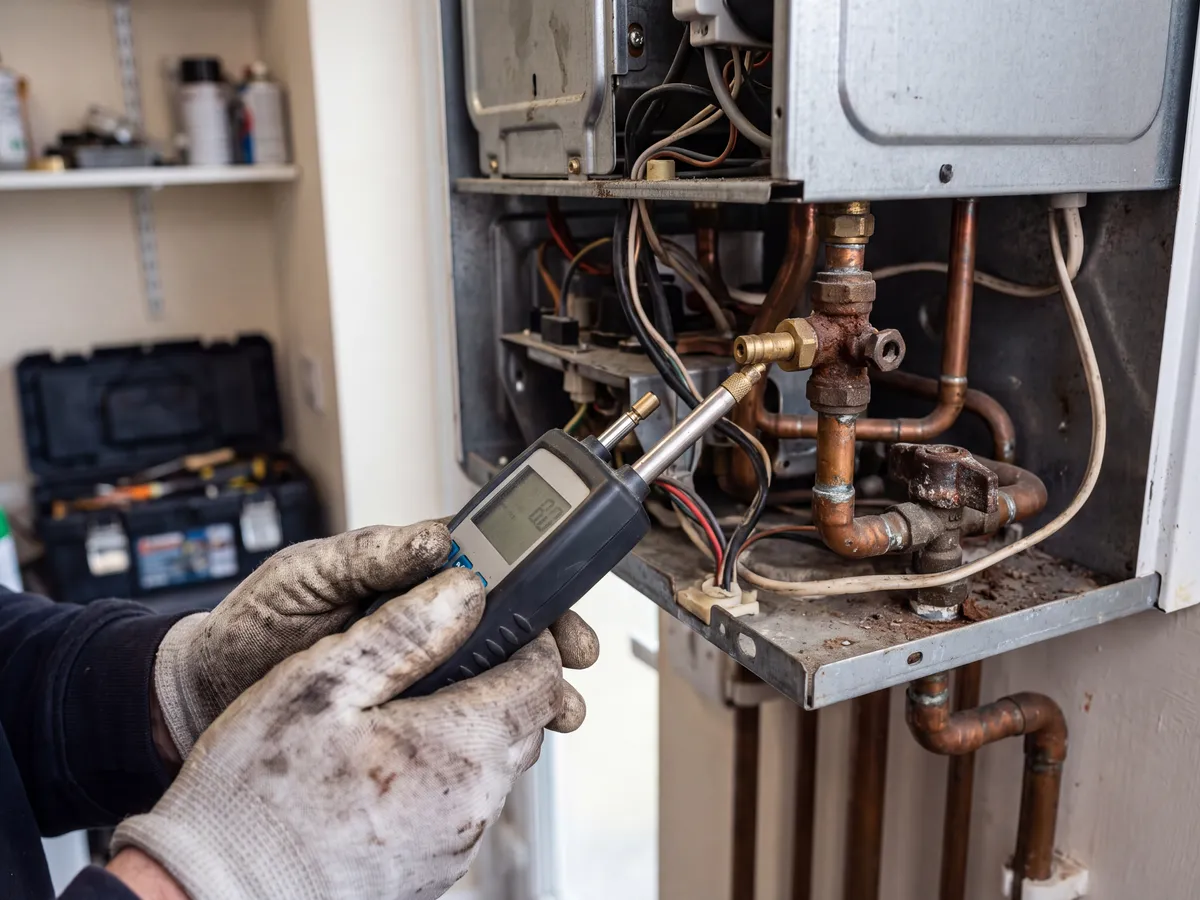
1 dayLive grid-fail test (we trip the main breaker, generator starts within 12 seconds, ATS swaps load). Handover walkthrough. Annual service contract booked.
Common questions
Are you NICEIC registered?
Yes, PHBLUE's electrical work is carried out by NICEIC-approved engineers. Notifiable work (Part P) is registered with your local Building Control automatically through NICEIC. You get the certificate emailed within 14 days.
How much does an EICR cost in Cardiff?
Domestic EICR (Electrical Installation Condition Report) starts at £150 for a flat or 1–2 bed home, £180 for 3–4 bed, £220 for 5+ bed. Includes the full report, photographs, and a follow-up phone call to walk you through any C1/C2/C3 codes. Landlord packages combining EICR + smoke/CO checks save £25.
My RCD keeps tripping - what's likely wrong?
Almost always one of three things. A failing appliance pulling the circuit down (we'll isolate by elimination). A damaged cable connection in the wall, usually behind a socket or switch where the live and neutral have crept closer over time. Or an end-of-life RCD, since modern dual-RCD consumer units are rated for around 15 years.
Do I need a new consumer unit?
If yours is a wooden-back, plastic-back, or pre-2008 metal unit without RCD protection, yes, because Wiring Regs (BS 7671) require it for compliance. A standard CU swap is £550–£750 fitted, NICEIC-certified. We'll check yours during an EICR or any other visit free.
Can you fit EV chargers?
Yes, OZEV-approved installer for 7kW home wallboxes (Pod Point, Easee, Wallbox, Hypervolt). Survey is free for households with off-street parking. We handle the DNO notification if your supply needs upgrading. The OZEV £350 grant ended in March 2022 for homeowners, but it's still available for renters and flat-owners under EVHS.
What's the smell of burning from my socket?
Switch off the circuit at the consumer unit and ring us. Don't wait. Burnt connections behind a faceplate progress fast, so what's a hot socket today is a wall fire next week. We treat these as priority callouts.
How quickly can you come out for an emergency?
For genuine emergencies (gas leak, no heat in winter, burst pipe) we aim to be on site within 60 minutes anywhere in Cardiff and within 90 minutes for Penarth, Barry, and the Vale. Out of hours, your call goes to a triage line that wakes Nigel for true emergencies.
Do you charge a call-out fee?
No call-out fee for jobs we go on to quote. Diagnostic visits where we don't carry out work are charged at our standard hourly rate, which we'll always tell you about up front.
How does the heat pump grant work?
The Boiler Upgrade Scheme pays toward an air-source heat pump install at one of two rates. If your home currently runs on oil or LPG you get £9,000, an uplift for off-gas-grid homes that runs until 31 March 2027. If you're on mains gas it's £7,500. The voucher is applied for through the installer before the work starts, so you never handle the paperwork or the money. The grant is discounted at the point of sale.
Are you Gas Safe registered?
Yes, every gas engineer who works under PHBLUE is Gas Safe registered. You'll see our registration number on every quote, every invoice, and every Gas Safety Certificate. You can also verify us directly on the Gas Safe Register's public lookup.
What areas do you cover?
Cardiff and the surrounding South Wales region, primarily Cardiff, Penarth, Barry, Caerphilly, Llandough, Roath, Rhiwbina, Whitchurch, and Cowbridge. If you're nearby and we don't cover your postcode yet, drop us a message and we'll see what we can do.
Do you charge a call-out fee?
No, not for any job we go on to quote or carry out. Diagnostic visits where we don't end up doing work are charged at our standard hourly rate (£90 first hour, £55 after) and we'll always tell you that up front.
Are quotes fixed price or estimates?
Fixed-price for everything we can survey: boiler installs, bathrooms, EV chargers, EICRs, central heating refurbs, heat pumps. Variable-rate for diagnostic and repair work, but with hourly rates published on every relevant page so you know before we start.
Can you take a deposit and stage payments?
For jobs over £3,000 we take a 30% deposit at scheduling, 50% on day one, balance on completion. That covers our materials outlay without exposing you. Smaller jobs are paid on completion. We accept bank transfer, card, and Apple/Google Pay; no cash in hand.
Do you offer finance?
Not directly: we're not authorised to broker credit. For boiler installs, Worcester Bosch and Vaillant both run their own finance schemes (0% over 12 months on installs through accredited installers like us). Ask at quote stage and we'll send you the application link.
Do you give written quotes?
Always. Every job over £200 gets a written, itemised, fixed-price quote before any work starts. The quote is yours to keep, valid for 30 days, and the price on it is what you'll pay: line-item breakdown for materials, labour, and any provisional sums.