What does an EICR actually involve?
An honest run-through of the Electrical Installation Condition Report; what it tests, what the codes mean, and why "satisfactory" matters.
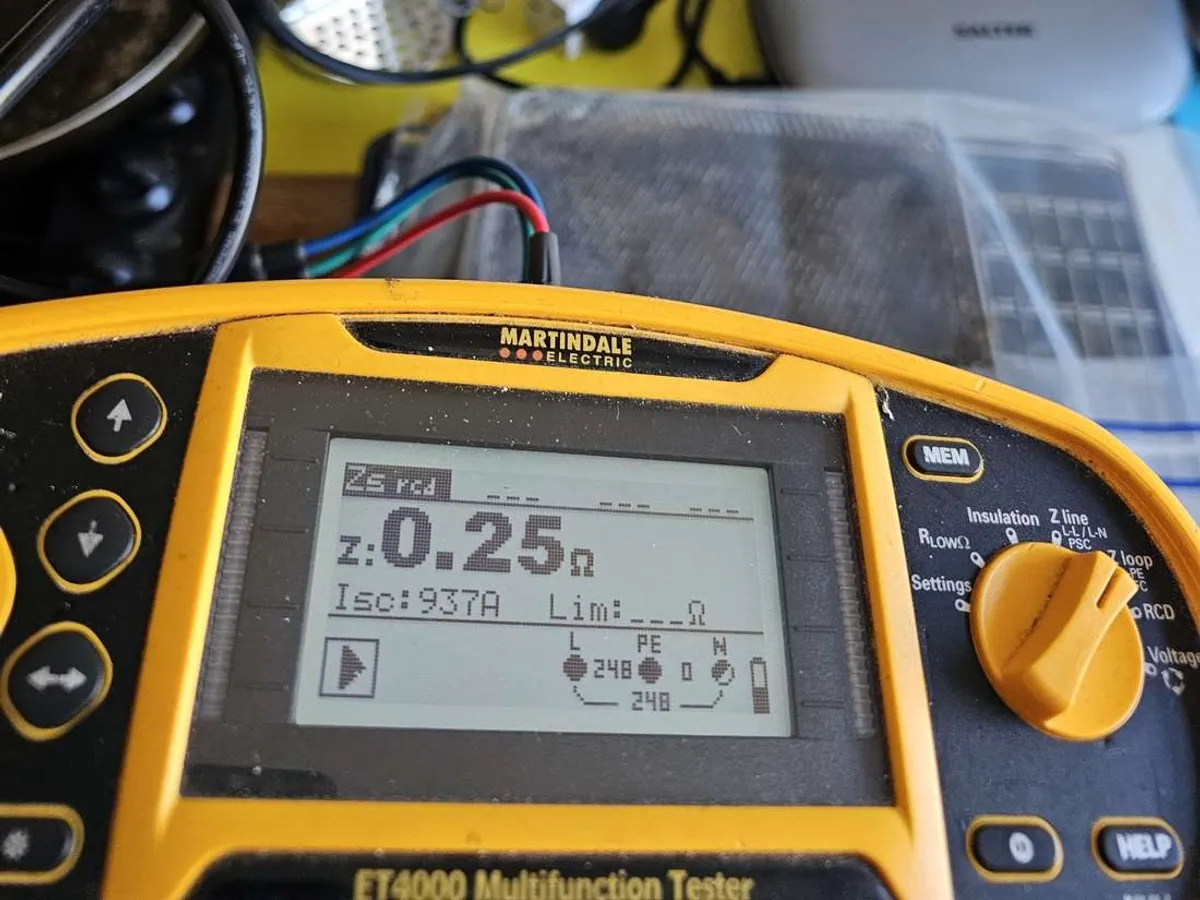
Every privately rented home in England and Wales has needed an EICR every five years since 2020. The next renewal cycle is now landing in waves. Here’s what a proper EICR actually involves, and how to tell if the one you’ve been quoted is being done properly.
What an EICR is, exactly
An EICR (Electrical Installation Condition Report) is a non-invasive inspection of the fixed electrical installation in a property. That means:
- The consumer unit (fuse board)
- All circuits (lighting, sockets, cooker, immersion, EV charger, etc.)
- A sample of fittings (sockets, switches, ceiling roses)
- The earthing and bonding arrangement
- The RCD trip-time and sensitivity
It does not inspect appliances or anything plugged in. Those are covered by separate PAT testing if your business needs that.
What gets tested
A proper EICR tests:
- Insulation resistance on every circuit: a 500V test that detects degraded cable insulation
- Continuity on protective conductors (earth wires) and ring final circuits
- Polarity at every fitting: confirms live and neutral aren’t reversed
- Earth-loop impedance (Zs): measures how quickly a fault would clear
- RCD trip times: must be ≤40ms at rated current
- Visual inspection of every consumer unit and a 1-in-4 destructive sample of fittings (faceplates removed, terminals checked)
The visit takes 2–4 hours depending on property size. We isolate power in zones for short periods, coordinated with you and the tenant.
How the codes work
Findings are classified against BS 7671 (the IET Wiring Regulations):
- C1: Immediate danger. Power must be isolated; rectification required before re-energising. (Typical C1: live wires exposed at a damaged socket.)
- C2: Potentially dangerous. Rectification required before re-letting. (Typical C2: missing RCD protection on bathroom circuits.)
- C3: Improvement recommended. Not legally required, but below current standards. (Typical C3: old wooden consumer unit, cable colour-codes pre-2004.)
- FI: Further investigation. A defect requiring further investigation to assess. (Typical FI: irregular reading on a socket circuit that might be a wiring error or might be an instrument anomaly.)
A certificate is “satisfactory” only if no C1 or C2 items remain. C3 items don’t fail the certificate; they’re noted for future improvement, but the property can be re-let.
What a proper EICR looks like
A genuinely thorough EICR will:
- Take 2–4 hours for a typical 2–3 bed flat or house
- Involve isolating power for short periods
- Include destructive sampling (1 in 4 fittings opened)
- Photograph every consumer unit and any item being coded
- Generate a detailed multi-page certificate with circuit-by-circuit readings
- Result in an invoice with the engineer’s NICEIC registration number, verifiable on the NICEIC public database
If your inspector finishes in 45 minutes without isolating any power and without opening any sockets, you haven’t had a proper EICR; you’ve had a walk-around. The certificate may still be issued, but it’s worthless if a problem comes up later.
What to watch out for
Common patterns in poor EICRs:
- “Satisfactory” with no destructive sampling. Visual-only inspections miss most of what an EICR is meant to catch.
- Coding everything as C3 to keep the cert clean. Real C2 items get downgraded to avoid forcing rectification work. Sometimes done innocently; sometimes deliberately.
- No photograph of the consumer unit. A proper EICR documents what was found.
- Quoted before the property is seen. EICR pricing varies hugely by property complexity. We always ask for a photo of the consumer unit before quoting.
- Free EICR with rectification work. Suspect: the rectification quote will be inflated to cover the “free” inspection. Pay separately for both and you can compare quotes.
Pricing: what’s reasonable
For a typical Cardiff rental:
- Studio / 1-bed flat: £180
- 2-bed property: £200
- 3-bed property: £225
- 4-bed+ property: £260
- HMO (3+ unrelated tenants): quoted on inspection (more circuits, more checks)
For letting agents managing 6+ properties, we offer per-property volume rates with quarterly invoicing and CSV reporting. If you’re paying flat-rate per visit and the cycle is staggered across the year, ask about the volume rate.
The 5-year cycle and what to do at year 4
The 5-year clock starts from the certificate’s issue date, not the inspection date; they’re usually within days of each other but worth checking.
We pre-book reminder slots 4 years 9 months ahead so you never lapse. Some agents prefer rolling annual visits with PAT testing or smoke-alarm checks bundled, and we’re happy to do it that way too. The key is not letting the cycle fall over.
Homeowners: should you bother?
For homeowners, an EICR is good practice every 10 years and required by some mortgage providers / insurers in specific circumstances (after a property purchase, after a major rewire, before re-mortgaging some periods). Same pricing applies.
It’s also a strong reassurance for buyers if you’re selling, particularly for older properties. If the listing photo shows a 1970s wooden consumer unit, an in-date EICR avoids that becoming a sticking point during the sale.
Booking and turnaround
We typically book EICRs inside 5 working days. The inspection itself is half a day; the digital certificate is emailed within 48 hours. Rectification work, if any, is quoted line-by-line within 48 hours of the inspection. There’s no obligation to use us for the rectification, but most do.